A collection of King's short stories and poetry 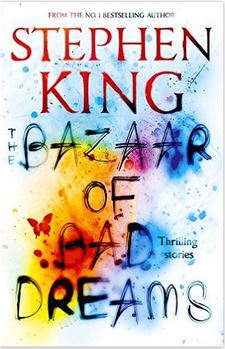 Over the years, I've come to admire Stephen King more and more, both for his prolific output and the amazing quality of his work. I've especially enjoyed his longer novels, such as '11.22.63', marvelling at how he maintains tension and interest for 700+ pages. I wasn't sure, therefore, what I'd think of King's short stories, although I suspect I could read his grocery list and find it enthralling! I needn't have worried - I loved 'Full Dark, No Stars', a great collection and one that inspired me to try 'The Bazaar of Bad Dreams', published in November 2015. It's a collection of eighteen short stories and two poems. (Poetry isn't my thing - I started both poems and gave up, so perhaps I overstated my case when it comes to King's grocery list!) It's worth noting that not all the stories are new; some, such as 'Blockade Billy', have been published before, which may disappoint diehard fans expecting a completely fresh experience. They were all new to me, however, so no complaints here! I love how King prefaces each story with an introduction, often revealing where he got his inspiration. As an author myself, it's fascinating to explore another wordsmith's process for transferring an idea from brain to page. 'Mile 81', for example, is a reworking of a story King wrote nearly forty years ago, resulting from his dislike of a particularly lonely stretch of road in Maine, familiar from his university days. For 'Batman and Robin Have an Altercation', he drew on a memory of a near-miss accident at a Sarasota intersection. The best introduction, however, is the one to the book itself. Here's a snippet from what King has to say: 'Here, sit down beside me. And do come a little closer, I don't bite. Except.... we've known each other for a very long time, and I suspect you know that's not entirely true.' An impressive collection of wonderful quality 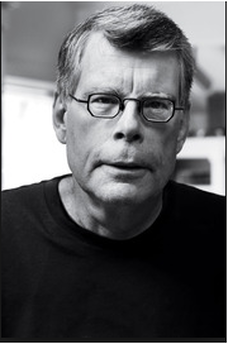 So what can the reader expect from 'The Bazaar of Bad Dreams'? Some of the stories, like 'Mile 81' and 'Bad Little Kid', are quintessentially Stephen King - a demonic flesh-eating car reminiscent of his novel 'Christine' in the first, an evil child in the second. Others, like 'The Little Green God of Agony', are more personal; in King's own words, a search for closure. The story resulted from the horrific traffic accident he suffered in 1999 that resulted in years of physiotherapy and learning to walk again. In keeping with the personal theme, his preface to 'Afterlife', an examination of what might come after death, King admits to an increasing interest in the subject as he grows older. The story reflects his preoccupation but delivered with a humorous touch. What awaits Bill Andrews after his demise is not a date with St Peter but with a man in high-waisted trousers, who's none too pleased to see him... My favourite is, I think, 'Ur', although it's a tough choice! 'Ur' deals with, of all things, a supernatural Kindle, which proves that a good author can weave a tale out of just about anything. Talking of which, the preface to 'Mr Yummy' intrigued me. I can't imagine telling Stephen King he wouldn't have anything new to say about AIDS! A friend of his did just that, with King, of course, proving him wrong with his wonderful story of a elderly gay man approaching his death in a care home. What else gets the King touch? Marriage, in 'Premium Harmony', 'Under the Weather' and 'Morality'; human stupidity in 'Drunken Fireworks'; and a post-apocalyptic world in 'Summer Thunder', a moving tale of a man and his dog that incorporates King's love of motorcycles. 'Blockade Billy' is centred around baseball, but with a dark twist. I loved 'The Dune', a tale of supernatural writing and a study of a deeply unpleasant man. Stephen says the story has one of his favourite endings and I agree; it's a cracker! An amazing talent, honed to a razor's edge In short, there's something here for every King fan, whether old or new. This is an impressive collection of wonderful quality from a writer whose talent, after over forty years, has been honed to a razor's edge.
0 Comments
Warning! Contains spoilers regarding the plot of 'Nineteen Eighty-Four'. 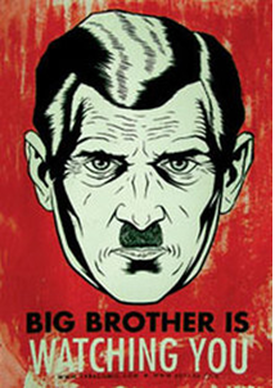 My fourth novel, 'The Second Captive', deals with the fascinating psychological phenomenon known as Stockholm syndrome. (More about what Stockholm syndrome entails later on.) Originally, I decided to blog about this as part of my 'Five' series, in which I examine five examples of anything fictional. No problem, I thought; I'll find the requisite number of novels about Stockholm syndrome and blog about them, and how they resemble or contrast with my own novel. Except it wasn't that easy. Mainstream fiction about Stockholm syndrome seems thin on the ground. Oh, I came up with lots of books professing to examine Stockholm syndrome. On closer examination, though, they all centred on BDSM themes, leaning towards the 'Fifty Shades of Grey' type of fiction. That's definitely NOT what 'The Second Captive' is about! So much for my original idea! Then I remembered one of my favourite novels, a book that made a huge impact on me when I first read it. A novel of such stature that I don't need four others for this blog post. One with a strong theme of Stockholm syndrome. That novel is 'Nineteen Eighty-Four' by George Orwell. What is Stockholm syndrome?  The former Kreditbanken The former Kreditbanken Before we examine 'Nineteen Eighty-Four' in more detail, let me explain what Stockholm syndrome is. For most of us, the concept is a weird one. How can someone profess to love the person who has captured them, held them against their will, even threatened them with death? The term originated after a bank robbery in Sweden in 1973, during which two robbers entered the Kreditbanken bank in Stockholm. A hostage situation ensued. For six days, the robbers held four people at gunpoint, locked in a bank vault, explosives strapped to their bodies, nooses around their necks. Bizarrely, upon their release, the hostages defended their captors; one set up a fund to cover their legal fees. Two of the women even became engaged to them. Thus the term "Stockholm syndrome" was coined. Other notable victims of Stockholm syndrome include Patty Hearst, who was kidnapped by the Symbionese Liberation Army but ended up joining their cause, and Natascha Kampusch, who wept when her abductor, Wolfgang Priklopil, committed suicide. So how does this strange psychological condition arise? Experts say at least three traits must be present: 1. A severely skewed power relationship between the individuals concerned. The captor decides what the hostage/prisoner can and cannot do. 2. The captor threatens the hostage/prisoner with physical harm or even death. 3. The hostage/prisoner holds a strong instinct for self-preservation. However, he believes he cannot escape and that survival is dependent upon the captor. Isolation from external points of contact enhances this viewpoint. Most of us have never been in such a desperate situation as the Kreditbanken hostages. If we endeavour to imagine what they endured, Stockholm syndrome seems less weird. If the only way to survive is to ally oneself with one's captor, is it not understandable that such feelings might deepen into something akin to love? Losing my fictional innocence... 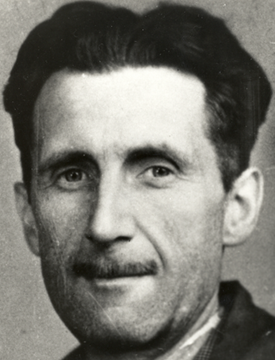 George Orwell, courtesy of Wikipedia George Orwell, courtesy of Wikipedia Let's turn now to 'Nineteen Eighty-Four.' I first read George Orwell's chilling novel in my teens, and since then I have been drawn back repeatedly to the book chosen by Time magazine as one of the best English-language novels published between 1923 and 2005. Orwell's story of life under a harsh totalitarian regime made a huge impression on me, partly because personal freedom is something I value greatly, but also because the novel's ending stripped away my fictional innocence. I remember approaching the second half wondering how Orwell was going to arrange the happy finale I was certain was coming. The one in which the Party is overthrown, democracy is restored, and Winston and Julia are free to carry on their relationship. As the number of words left for me to read grew ever fewer, I became increasingly perplexed. How, I asked myself, can all this be resolved when the book is running out of pages? Then I read the last chapter, a stunning conclusion to an outstanding novel, one which shattered every one of my naïve notions. A chilling dystopian nightmare of a world 'Nineteen Eighty-Four' is a perfect example of a dystopian novel. Set in a world where individualism is persecuted and labelled as 'thoughtcrime', it paints a bleak portrait of life under a harsh political system known as Ingsoc. The novel is based in the United Kingdom, now renamed 'Airstrip One', part of the superstate Oceania. Orwell describes a world of perpetual war, with Oceania always fighting one of the other two superstates, called Eurasia and Eastasia. Life is tough for the inhabitants of Airstrip One. The news is manipulated, citizens exist under constant surveillance, living conditions are squalid and there are shortages of basic necessities. Unless you're a member of the Inner Party, that is, the top 2% of the population who make up the ruling elite. For them, life is comfortable, prosperous, privileged. The rest of the country is split between the middle-class Outer Party members and the working-class 'proles', whom the Party largely ignores. At the very top of the system is Big Brother, around whom an immense personality cult has sprung up, even though it's unclear as to whether he actually exists. No happy ending for this novel... 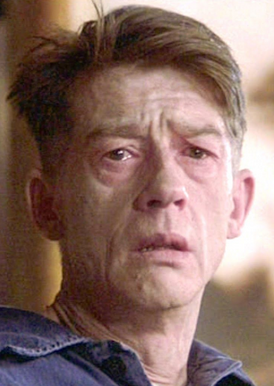 John Hurt as Winston Smith John Hurt as Winston Smith In this dystopian nightmare lives Winston Smith, an ageing Outer Party member, who works at the Ministry of Truth, rewriting recent history to reflect the current Party stance. Outwardly, Winston toes the Party line, but inwardly he hates the system and Big Brother, striving to make contact with The Brotherhood, a shadowy organisation dedicated to overthrowing the Party. Along the way he embarks on a passionate affair with a woman called Julia. They meet clandestinely in a squalid rented room, before being discovered and arrested. Winston undergoes a brutal ordeal of torture and interrogation, during which he encounters the chilling O'Brien, a member of the Inner Party and an interrogator at the Ministry of Love. O'Brien leads Winston's mind through the three stages of rehabilitation necessary for a good Party member: learning, understanding and acceptance. Then Winston is released, a free man. He slides into alcoholism, but also displays the symptoms of Stockholm syndrome. Alone, downing gin at the Chestnut Tree Cafe, he's pleased he's achieved a victory over himself, ending his previous "stubborn, self-willed exile" from the love of Big Brother, a love he now returns. An unequal balance of power 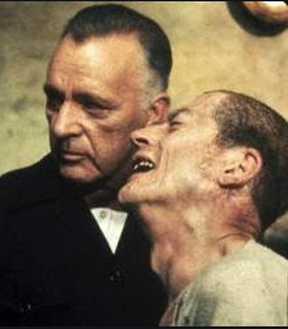 Winston and O'Brien Winston and O'Brien Let's look at how the relationship between Winston and O'Brien evinces the three key components of Stockholm syndrome. Firstly, the presence of a severely skewed power relationship. Tick number one. Winston Smith is a prisoner in the Ministry of Love, completely at O'Brien's mercy. Secondly, the threat of physical harm or death. O'Brien tortures Winston, including exposing him to his deepest, darkest fear - rats - in the dreaded Room 101. As for death, Winston's work at the Ministry of Truth has made him aware that Party opponents are routinely killed and written out of existence. Another tick here, then. Thirdly, Winston holds a strong instinct for self-preservation, evident in his love for Julia and his desire for a fairer world. Final tick. Despite the fact he's his torturer, O'Brien positions himself as both a father figure and a friend to Winston. Even in the interrogation scenes, an intimacy flourishes between the two men, with O'Brien showing an uncanny ability to know what Winston is thinking. Even as he inflicts pain on his victim, he professes to be doing it for Winston's own good, to save and purify him. The ground has been prepared, therefore, ready for the seeds of Stockholm syndrome to germinate. And that's exactly what happens. By the end of the novel, Winston's capitulation is complete. Evidenced by the incredible closing paragraph, as Winston stares at a poster of Big Brother: "He gazed up at the enormous face. Forty years it had taken him to learn what kind of smile was hidden beneath the dark moustache. O cruel, needless misunderstanding! O stubborn, self-willed exile from the loving breast! Two gin-scented tears trickled down the sides of his nose. But it was all right, everything was all right, the struggle was finished. He had won the victory over himself. He loved Big Brother. " Powerful stuff! Stockholm syndrome and my fourth novel 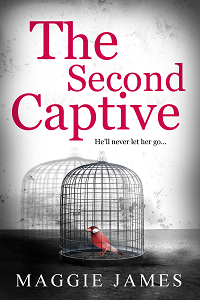 So how do I demonstrate Stockholm syndrome in 'The Second Captive'? Again, let's look at the three key components (without giving plot spoilers!)
1. There exists an unequal power relationship between my protagonist, the emotionally immature Beth Sutton, and Dominic Perdue, the man who abducts her and holds her captive by locking her in the basement of his house. 2. He mistreats her, demanding absolute compliance with his wishes. Whilst he's not a torturer like O'Brien, he does lead Beth to believe he's a killer. She fears her life may be in danger if she doesn't fall in with his wishes. 3. Beth is young, with a strong sense of self-preservation, demonstrated by her desperation to be reunited with her mother. Isolated as she is, though, the effects of Stockholm syndrome gradually creep up on her… Here's a taster: Beth Sutton is eighteen years old when Dominic Perdue abducts her. Held prisoner in a basement, she’s dependent upon him for food, clothes, her very existence. As the months pass, her hatred towards him changes to compassion. Beth never allows herself to forget, however, that her captor has killed another woman. She has evidence to prove it, as well as Dominic’s own admission of murder. Then Beth escapes… And discovers Dominic Perdue is not a man who lets go easily. Meanwhile, despite being reunited with her family, she spirals into self-destructive behaviour. Release from her prison isn’t enough, it seems. Can Beth also break free from the clutches of Stockholm syndrome? A study of emotional dependency, 'The Second Captive' examines how the mind makes dark choices under duress. Available from Amazon - click or tap the picture or this link: The Second Captive. (Guest post by Samuel Marquis) Readers should support authors of any stripe for only one reason: great writing 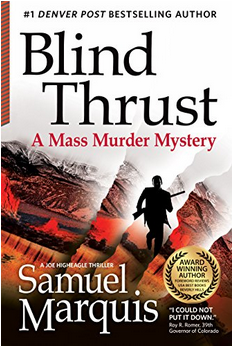 Years ago, when I was a literary neophyte and secretly harbored delusions of grandeur about the publishing industry, mega-author James Patterson gave me a blistering review for my Colorado-based earthquake thriller 'Blind Thrust'. The simple truth is I deserved it (he also gave me a glowing quote for my book 'The Coalition', but that’s another story). I fully deserved his ridicule for the first incarnation of 'Blind Thrust'—fully deserved to be flogged like an 18th century seaman in the Royal Navy—because my novel was, though I didn’t know it at the time, not up to industry standards in terms of the opening and overall plotting. It was not a bad novel; it just wasn’t sufficiently enticing to persuade someone to shell out $20 at Barnes and Noble or Tattered Cover. In other words, I didn’t give the creator of the Alec Cross Series and the biggest-selling author since the Precambrian Era sufficient justification to promote me or my writing because the book I was peddling was flawed, even though it was reasonably well written and seemed to me and my circle of reviewers at the time to be promising. In short, I had done the unspeakable thing that no storyteller—whether you are indie, traditional legacy, or a cave-painting Cro-Magnon at Lascaux—should ever do, and that is put out a story that isn’t quite ready for prime time. To my infinite chagrin, I had not earned the right for James Patterson to lend me his support for this particular novel. So what did I do? I went back and rewrote the book. Literally salvaged the submerged wreckage and rewrote the whole bloody thing. Then I had it professionally edited. Then I rewrote it again and edited it some more until I had revised it at least a dozen times. The editorial process landed me an agent, who proceeded to give me more editorial input, but at this point they were only minor tweaks because the book was highly polished. And now, recently, I received a completely different response to this reconstituted prose that had once been considered slush pile fodder. And from a highly credible critic I might add, someone who knows a thing or two about the written word, as he has perused hundreds of thousands of pages of non-fiction and fiction alike in his lengthy career in politics and as a Homo sapien sapien: “Blind Thrust kept me up until 1 a.m. two nights in a row. I could not put it down. An intriguing mystery that intertwined geology, fracking, and places in Colorado that I know well. Great fun.” —Roy R. Romer, 39th Governor of Colorado 73 eager fans on four continents... The quote, I might also add, was unsolicited. So, by a simple twist of fate, the three-term governor of the Centennial State and one-time chairman/co-chairman of the Democratic Governors Association, Leadership Council, and National Committee, as well as the Clinton-Gore '96 campaign, got hold of an Advance Reading Copy of 'Blind Thrust', proceeded to read it cover to cover, and decided to give me a rave review (Okay, full disclosure, he snagged a copy of the ARC from his son, my friend Tim, that had been laying there on a table in Vail, but please note that the honorable Gov. Romer doesn’t know me from Donald Trump). What’s important about the episode is that a book that was once justifiably pilloried in its earliest incarnation had miraculously become so enthralling that a highly discriminating reader who presumably likes to go to bed early could not put it down and was forced to stay up late two nights in a row to finish the book. That same discriminating reader then proceeded to send me an unsolicited book blurb declaring before the entire world (or at least the 73 people from four continents, including my 94-year old Aunt Margaret, who will actually read my book): “I could not put it down.” The quote has made its way onto the front and back covers of Blind Thrust, which has now been released for the enjoyment of my 73 eager fans. There is only one reason that any of this happened: the novel went from subpar, or just not good enough for publication, to something closer to superb, or at least good enough that it was deemed 'unputdownable' by an unbiased reviewer whose opinion actually matters. Authors should hold readers hostage with their writing Author Samuel Marquis Author Samuel Marquis So why should readers support indie and traditional legacy authors? For only one reason: good solid writing. Craftsmanship. Actual hard work, sacrifice, and talent coming together into an amalgam of significance. Having gone through this experience, I realize now what the ultimate goal of a thriller writer should be: Make people stay up late at night against their will and not want to put the book down. Hold them hostage with your writing. Because they will only go against their will if the suspense is so gripping, the plot and characters so riveting and unpredictable that the story literally casts a temporary spell over them. Because the book you’ve penned—even if it’s not 'Moby Dick' or 'David Copperfield'—is quite good in its own unique way. And that is the only reason why readers should support authors, be they indie or traditional legacy authors or those fur-clad, cave-dwelling raconteurs at Lascaux. Because a work is actually really damned good. Unfortunately, it is hard to make something hard to put down and make every page, indeed every line or paragraph, fume with tension. I know I have failed miserably in the past and I will no doubt fail again in the future. But ultimately quality and constant tension should always be the goal in a suspense novel. Nothing else should matter. We all have to write better and put forward the best material we can. Material that has been thoroughly vetted and edited and re-edited until we are bleary-eyed and brain-dead and so utterly preoccupied with making the thing good that our friends and significant others are convinced that we’ve taken a lover on the side. Ultimately, readers don’t care if you received your Creative Writing degree from Oxford or Yale, are a mega-best-seller, or are close friends with J.K Rowling or Lee Child. They just want a great story. Over and over again, every time out. Readers will always support great writing. And they will stay up late at night to read it. But only if we writers put in the hard work and truly do our jobs. I had to learn that lesson the hard way. More about Samuel MarquisSamuel Marquis works by day as Vice-President – hydrogeology for an environmental consulting firm in Boulder, CO, and by night as writer of historical and modern suspense novels. He is the author of 'The Devil's Brigade, 'Blind Thrust' and many other novels, has published over 25 articles in peer-reviewed scientific journals/books, and has served as an expert witness on multimillion dollar environmental cases.
He can be reached on his website at www.samuelmarquisbooks.com or by email at samuelmarquisbooks@gmail.com. Fiction writing as a catharsis? 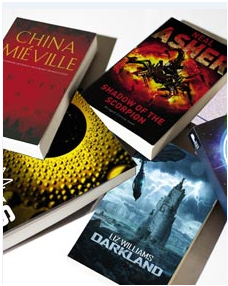 Courtesy of The Guardian Courtesy of The Guardian Do novelists use their fiction as a catharsis for their personal issues? Since I began my writing journey, I’ve realised that many people believe they do. ‘I’m keen to read your books,’ someone once told me. ‘I’ll find out more about what makes you tick.’ I’m paraphrasing, but that was the essence of her words. ‘No, you won’t,’ was my inner response. Her comment got me thinking, however, so I mentioned the conversation to a fellow novelist. ‘A friend of mine believes fiction writers explore their issues via their writing,’ I told her. ‘I think that’s a huge overgeneralisation. I don’t.’ The reply was immediate, its tone dismissive. ‘Of course you do. Don’t all writers?’ I was flabbergasted. It’s a view I strongly contest. Its proponent is, I believe, falsely extrapolating from her own circumstances. For her, writing is indeed a catharsis; she uses her work as a vehicle to explore her childhood issues. She’s not alone. Stephen King has said that he writes about what scares him as a way to exorcise his own demons, using fiction as an alternative to therapy. Fair enough, but for me, it seems a flawed assumption to say that all writers are the same. We're not all tortured souls in need of therapy 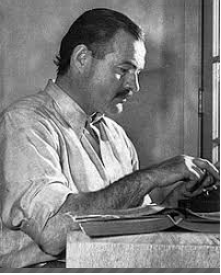 Courtesy of Wikipedia Courtesy of Wikipedia The notion that authors use their novels as a catharsis for exploring their psyche seems a common one, though. Perhaps it comes back to our tendency to embrace one-size-fits-all stereotypes as a convenient, but lazy, way of interpreting the world. Once an image gets into the popular imagination, it sticks. Fiction writers? Aren't they all tortured souls who fuel their literary outpourings during the small hours via copious amounts of alcohol, in between lamenting the perils of writer’s block? Take Ernest Hemingway, right? Case closed. The truth is, novelists are a diverse bunch. Sure, some will seek to explore personal issues via their fiction. Others won’t. There’s no cookie-cutter profile that fits all. I can best give my own position by saying that I’m a private person; the notion of exploring my psyche publicly via my novels fills me with horror. Writing is not, I repeat, not a catharsis for me. None of the terrible issues I inflict upon my long-suffering characters have ever happened in my life. I’ve never been kidnapped, violently raped, endured a psychotic sibling or absent parents. Phew, plenty of things there for which to be grateful! My motivation for writing fiction is simple. I love being a novelist. OK, so my books fall into the psychological suspense category. That in itself says nothing about me. Yes, I’m fascinated by the workings of the human mind, but there aren’t many topics in which I’m not interested. Maybe some people will say 'Methinks the lady doth protest too much', but if that's you, then so be it. I can't change how you think, and besides, I'd rather be writing. My seventh novel beckons... Novelist Iain Rob Wright's take on the subject 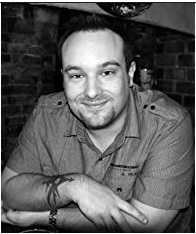 Iain Rob Wright Iain Rob Wright Other fiction writers agree with me. The British horror/thriller novelist Iain Rob Wright said on his blog: ‘Just because someone has read one of my books, does not mean they know a single thing about me. I write characters with views of their own. If one of my protagonists collects stamps, that does not mean that I do. The truth is that I would never make my own views entirely obvious through my work, because then I am not creating fiction, I am writing propaganda.’ My point exactly! So to readers of my books, of Iain’s books, to fiction readers in general, I’d say this. Read our novels because you enjoy them, not to discover more about us. Don’t think you can judge an author by his/her books. You can’t presume to know a novelist's motivation for writing, unless they’ve publicly stated it. What do you think? Let me know! I’d be interested to hear from other fiction writers. Is your work cathartic for you? If so, to what extent? Readers, do you make assumptions about an author based on what they write? Leave a comment and let me know!
So many books, so little time!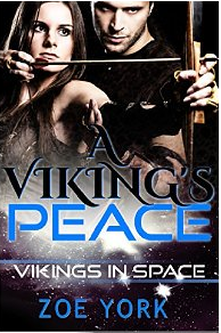 Once I used to reread favourite novels, happy to revisit those I'd enjoyed before. Sometimes I'm nostalgic for the times when I'd curl up with a treasured book to savour its magic again. Even though the story was no longer a mystery, I'd always catch nuances I'd missed before, making each reread a new take on the familiar. A long time has passed since I read the same title more than once, though. It's a trend that's set to continue. Why? Well, thanks to changes in the publishing industry, we're spoiled for choice when it comes to fiction. Thousands of new novels are uploaded to Amazon every day. In addition, the new wave of self-publishing is creating new genres by merging existing ones. Which makes for fascinating choices! Fancy a science fiction romance? No problem. Want to add Vikings to the mix? Your wish is granted. There are novels about dragons in space, unicorns in ancient history, you name it. In addition, self-publishing has revitalised more than genres. Short stories and novellas are making a comeback, providing even more reading options. With such a cornucopia of material available, not to mention classic novels I've yet to read, I don't have time to pick up the same book twice. Not that I'm complaining, you understand! I don't want old favourites to disappoint 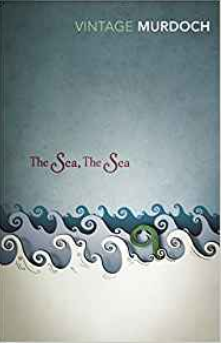 Besides the plethora of new titles available, there's another reason I don't revisit past fictional adventures. A strong possibility exists that, after a gap of several decades, they'll disappoint. Take Iris Murdoch's 'The Sea, The Sea'. I first read this novel in my twenties, and I loved it. The character of Charles Arrowby, his selfishness, the way he blinds himself to the obvious, mesmerised me. The novel charts his reunion with his first love, Mary Hartley Fitch, whom he has not seen since his youth. Thanks to his reclusive life, he develops an obsession with her, despite the fact she now sports an old-lady moustache and doesn't return his interest. I've always been fascinated by human behaviour and foibles, and Charles's egotistic pursuit of the unfortunate Hartley, which involves her kidnap, makes wonderful reading. Years ago, a friend and I discussed the novel, with her being as taken with 'The Sea, The Sea' as I was. Recently, however, Doran told me she'd reread the book. Had it reprised its magic for her? The answer is no. 'I've no idea why I liked it so much in the first place,' she said. Which makes me wary about rereading my old favourite. Disillusion can be a bitter pill. Isn't it better for 'The Sea, The Sea' to retain its place in my affections, rather than me risk tarnishing its memory? Tastes and priorities change... 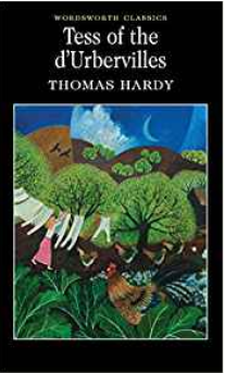 Perhaps this reflects the changes we all experience in life. Tastes and priorities alter. In my fifties, I'm very different to the woman I was in my twenties. Who wouldn't be? There's a good chance that Iris Murdoch's iconic book may not enchant me second time around. Take Thomas Hardy's wonderful novels, for example. As a teenager, I read every single title, relishing Hardy's biting examination of social injustices. I loathed the hypocritical Angel Clare in 'Tess of the D'Urbervilles'; Michael Henchard's character in 'The Mayor of Casterbridge' appalled me. A man who scorned his bride-to-be for not being a virgin? A rogue who sells his wife at a country fair? Shame on both of them! I also loved Hardy's lyrical descriptions of the Dorset countryside, for which his books are justly famous. An example: 'Here in the valley, the world seems to be constructed upon a smaller and more delicate scale; the fields are mere paddocks, so reduced that from this height their hedgerows appear a network of dark green threads overspreading the paler green of the grass. The atmosphere below is languorous, and is so tinged with azure that what artists call the middle distance partakes of that hue, whilst the horizon beyond is of deepest ultramarine.' (From 'Tess of the D'Urbervilles'). Nowadays I feel little desire to read any of his books again. For one thing, I'm less concerned with social commentary than I was. And whilst not denying the beauty of Hardy's prose, I'm now impatient with long-winded descriptive paragraphs. I prefer brisk action rather than eulogies about hedgerows. So I'll leave off revisiting Hardy, or any of the novelists who enchanted me as a younger woman. Time's a wastin', as they say. Instead, I'll choose something new to read. What about you? Do you like revisiting fictional favourites? Are there books that are timeless for you, providing enjoyment every time you read them? Or do you prefer to discover fresh treasures? Leave a comment and let me know!
A while back, I posted a review of 'The White Room' by bestselling thriller writer Martyn Waites. I'm delighted to welcome the man himself to my blog today. Here's our discussion: Tell us about your novel, The Woman in Black: Angel of Death.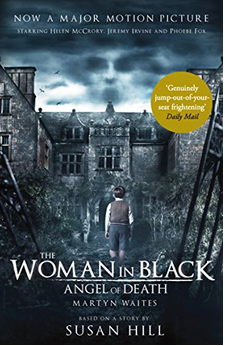 Well, it’s something I’m particularly proud of. At first I thought I was just going to be writing a film tie-in which I thought would be fun because I hadn’t done anything like that before. Also I’m a huge Hammer Film fan and to have my name and Hammer on the spine of a book was enough for me, really. Plus it was a complete departure from anything I had written before. The opposite of my usual stuff, really. But … then I was told this wasn’t just to coincide with the new film but was going to be the official sequel to the novel itself. And then I found myself in the papers answering questions. And then I realised I’d taken on quite a daunting task. But I wrote it and really enjoyed it. It’s different to the first one and different to the film as well. I saw it as my chance to use every gothic trope that I could think of, making homages to all the great writers and filmmakers who had so excited me. So Poe is in there, a bit of M R James, hopefully a bit of Terence Fisher . . . Great fun to write. Has your early career as an actor helped you with your novel writing? Do you see yourself returning to acting in the future? I don’t know. It’s probably a never say never thing. I have no plans to return to acting but I would listen to offers. However, I’ve been out of it for so long I doubt I’ll get any offers. Also, I used to love theatre; that was my real passion, more than TV or anything else. But the thought of committing myself to a long run now doesn’t really appeal. As to whether it’s helped in my writing: yes, I think so. I find creating characters for the page the same as creating them onstage. I use the same intuitive processes as I would as an actor. Find the voice, the look, the walk, etc. And also, I find dialogue very easy to write. I think that’s down to my actor background. Will you venture into any other genres? If so, which ones?I already have. I’ve ventured into music journalism. Great Lost Albums came out in 2014. It was a collaboration between myself, Mark Billingham, Stav Sherez and David Quantick. We spent years trying to track down albums that we had only heard whispers about, legendary albums that may never have even existed . . . No we didn’t. It was a comedy book. Mark and I were trying to entertain each other on a train one day when we were out on tour together. What would Morrissey’s great lost panto album sound like? What if Pete Townsend did a rock opera about a deaf, dumb and blind bingo caller called Bingo Wizard? What if Coldplay became IKEA’s resident house band? Those kinds of things. Just to entertain ourselves really. By the time we’d got back to London we thought we had a book there. So we roped in Stav, who is of course a brilliant crime novelist but also used to be a music journalist, and Dave Quantick who also used to be a music journalist but who’s now better known for writing for the BAFTA winning Harry Hill’s TV Burp, The Thick of It and the Emmy-winning Veep. Then it was just a question of coming up with fifty albums that made us all laugh. The book came out last autumn and despite being the funniest book ever written, kind of disappeared. So it was back to the day job. You also write as Tania Carver. How different is that from being Martyn Waites?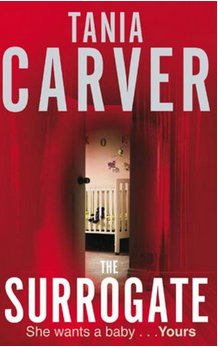 Well, there’s the name for a start. It’s interesting. Tania (if I can refer to myself/herself in the third person) is different from Martyn. The books are slightly different. They’re all crime novels but with the Tanias there are changes of emphasis, there are scenes that I wouldn’t put in a Tania that I’d keep for a Martyn. And vice versa. I don’t actually know what the differences are but I can feel them when I’m writing. I guess it’s like how it must have been for Donald Westlake writing as Richard Stark. The same, but different. Flexing different muscles, playing different chords. That kind of thing. Or at least that’s how I think of it. The other thing is writing under a female pseudonym. When the first Tania came out, The Surrogate, it was a massive bestseller, both here and internationally. I can remember standing in W H Smith where it was book of the week and watching people come in, pick it up and take it to the till. And of course I couldn’t say anything. Well, not without being forcibly ejected from the shop. I’ve got used to it now though. Tania is kind of my main writing at the moment. But doing things like Woman in Black and Great Lost Albums help to keep me and the series fresh. Tell us how American crime fiction of the Nineties influenced your early work.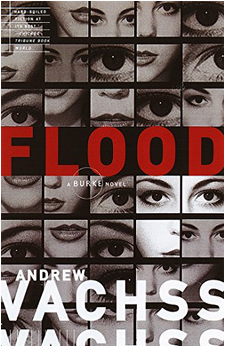 Wow, you’ve done your homework. Or you’ve heard me blathering on about this at great length, usually when I’ve had a drink. It was the late eighties and I was casting around for my ‘thing’. I was already acting and had what other people thought of as a promising career (which I think meant I was working and not unemployed). I loved reading and had tried everything but nothing seemed to stick, nothing spoke to me, moved me. Until I read Chandler. Then Hammett, then Ross MacDonald. Then James M Cain . . . and on and on. Actually this was in the mid-eighties when I was still at college. When I left I was still reading the old school stuff. I hated British crime writing at the time. Parochial, dull, boring. No connection with me or my life. Then I looked back at some of the neglected British writers like Ted Lewis, Gerald Kersh and, my favourite, Patrick Hamilton and wished we had people like that still writing. So I had a look at some of the American writing that was starting to appear then. And it was a pretty fertile time for it. Like punk and new wave happened over here in the late seventies and revitalised the culture, in the late eighties the same thing happened with American crime fiction. I read Andrew Vachss and it was like someone hadn’t just opened the windows onto a world, they had blown the side of the house off. James Ellroy next, then James Lee Burke, James Crumley, Walter Mosely, Sara Paretsky . . . wow. On and on. And that was when I realised I had found my thing. They wrote about urban landscapes I could recognise, about lives and struggles I could relate to. It was real life reportage, spat back as literature. And I couldn’t get enough of it. And then I thought (because I was already telling myself I was going to write a novel), why don’t I do what they’re doing? Transpose it for the UK but bring that energy, that sense of engagement the politics, the anger with it? Yeah, why not? I realised that quite a few other British writers were having the same idea at the same time. It just took some of us longer to actually get into print. But they were my literary touchstones, the ones who inspired me. You’ve held writing residences in prisons. Do you know if any of your students have published their work? How rewarding did you find encouraging offenders to write?I don’t know if I’ve actually led anyone to be a writer. There were some who were definitely good enough but I don’t know if they have or not. I worked as a writer in residence in a young offenders institution for two and a half years. Then for another year in an adult prison. To be honest, I could write a book on it. It was the most unique experience. It was the most polarised environment I’ve ever worked in. One day you’d be feeling like you could touch the stars, the next like you wished you were shelf-stacking at Budgens. Successes were stratospheric, failures equally so in the wrong direction. It was an honour to try and use my skills to effect a positive change in someone’s life. Tell us a little about the writing process for you. How long does an average novel take? How difficult (or not) are you to live with when creating a novel? Are you a planner or someone who writes by the seat of their pants? So many questions in that one question . . . Okay, here goes. I can answer the second bit first. How difficult am I to live with when I’m writing? Very. I sometimes put off starting a book because I know that it’s going to change me. It’s like you can never switch off and your mind is always on the work. At my best I’m kind of semi-detached while I’m working. At worst I’m the kind of writer that people go and stay with their relatives rather than be with. Do I plan or make it up? Kind of both, really. I know that sounds diametrically opposed, but it’s not. I usually start with an idea or an image. That then suggests questions to me. And it takes the course of the book for me to answer them. I usually say that the first hundred pages or so are like an audition. It’s me finding out who the characters are, why they’re there, what they sound like . . . all of that. And the ones with the most interesting voices are the ones I want to stick with. Then I can see a structure developing so I start to plan ahead a little. Maybe fifty or a hundred pages or so. Then after that, take stock and plan the next section. And so on. As for how long it takes, I don’t know. I try and allow myself a year to write a novel but always hope it takes less than that and I can fit something else in as well. But it varies. The longest it took me to write a book was five years. The shortest, three months. There are no hard and fast rules. And I also feel when I sit down to start the next book that I’ve learned absolutely nothing for my previous books. A blank screen is always a blank screen. And it’s up to me to be as creative as possible in how I fill it. Finally, tell us something weird and wonderful about yourself that your readers might not know.To be honest, I don’t think there’s anything weird - and certainly nothing wonderful - about me. I kind of wear my passions on my sleeve so most people know my politics, my interests, all of that. I can’t really think of anything. I’m a huge Doctor Who fan, right back to 1963. I love my pulp fiction, my horror movies, my film noir, my comics . . . possibly the only thing that not many people know about me is that I like modelling. Not on the catwalk, obviously, but making models. I’ve got a scale replica of Frankenstein’s monster and the Bride of Frankenstein from the film of the same name to work on next. I’m looking forward to that. Once I’ve finished my Doctor Jekyll and Mister Hyde model, that is. I enjoy it. The solitude, the concentration. You can listen to music while you work, which I can’t while I’m writing. And it uses another part of my brain to the writing part, lets me flex some other mental muscles. Love it. I used to win competitions for it when I was little. And that’s something not many people know. Thank you, Martyn! It's been a pleasure to talk with you.You can find out more about Martyn and his books, including the Tania Carver ones, via his website, www.martynwaites.com. Or you can connect with him on Twitter - @MartynWaites
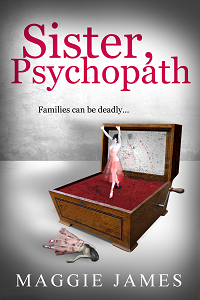 My second novel, 'Sister, Psychopath', was inspired by a real-life crime. At a writing workshop, our facilitator told us about a murder carried out by a mentally disturbed woman. She fixated on a male colleague, a married man who had a young child. They were never lovers but her obsession with him steadily grew, so much so that she decided to murder his wife and child, believing she could then marry him. She went ahead and killed his family, but her daughter became suspicious and contacted the police. The woman was arrested and convicted, receiving a life sentence. When I heard this, my curiosity was piqued. How would it feel, I wondered, to be that woman's daughter? To make such a terrible discovery about her mother? The point our facilitator was making was that true crime is often a great source of inspiration for fiction writers. In this instance, it certainly was for me. Out of this premise came the character of Megan Copeland in 'Sister, Psychopath'. I ended up taking the novel down a different path, away from Tilly Copeland's fixation on her boss, exploring instead the relationship between Megan and her sociopathic sister Chloe. However, I'll always be grateful to our workshop leader for sowing the seeds for my second novel. My experience isn't unusual, of course. Many novels have been influenced by true-life crimes. In this week's blog post I'll continue my 'Five' series by giving some examples. 1. Psycho - Robert Bloch, 1959 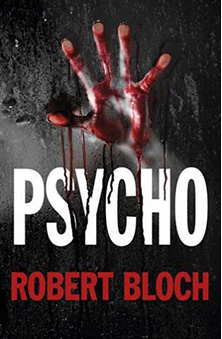 Written in 1959 by Robert Bloch, Psycho was inspired by the real-life crime of Ed Gein, arrested in 1957 for the murders of two women in Wisconsin. When police searched his home, they found furniture and clothing made of skin and female body parts. Gein had raided graveyards to make a skin suit that he planned to wear while pretending to be his dead mother. Bloch's novel created the iconic character of motel owner Norman Bates, who murders his mother and takes on her personality. Even if they've not read the book, most people are familiar with the story from the famous Alfred Hitchcock film. Remember the shower scene?! Here's the synopsis of the novel from Amazon: 'She was a fugitive, lost in a storm. That was when she saw the sign: motel - vacancy. The sign was unlit, the motel dark. She switched off the engine, and sat thinking, alone and frightened. She had nobody. The stolen money wouldn't help her, and Sam couldn't either, because she had taken the wrong turning; she was on a strange road. There was nothing she could do now - she had made her grave and she'd have to lie in it. She froze. Where had that come from? Grave. It was bed, not grave. She shivered in the cold car, surrounded by shadows. Then, without a sound, a dark shape emerged from the blackness and the car door opened. Psycho is not a tale for queasy stomachs or faint hearts. It is filled with horrifying suspense and the climax, instead of being a relief, will hit the reader with bone-shattering force.' 2. The Silence of the Lambs - Thomas Harris, 1988 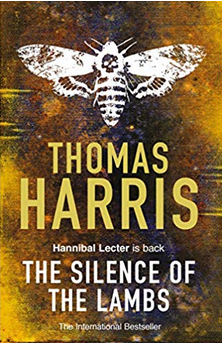 The exploits of Ed Gein also served as the inspiration for Thomas Harris's 1998 novel The Silence of The Lambs. In the book, Gein morphs into a serial killer known as Buffalo Bill, a man who kidnaps overweight women, starves them for a few days and then kills and skins them. Like Psycho, most people know the story even if they've not read the book. Who hasn't seen the film clip of Hannibal Lecter expressing his preference for Chianti to accompany a dish of human liver?! Here's the Amazon synopsis of the novel: 'An FBI trainee. A psychopath locked up for unspeakable crimes. And a serial killer getting ever closer to his latest victim ... FBI rookie Clarice Starling turns to Dr. Hannibal Lecter, monster cannibal held in a hospital for the criminally insane, for insight into the deadly madman she must find. As Dr. Lecter invites her into the darkest chambers of his mind, he forces her to confront her own childhood demons as the price of understanding, an unspeakable tuition he exacts to teach her how the monster thinks. And time is running out . . .' 3. The Black Dahlia - James Ellroy, 1987 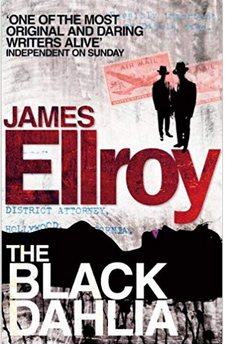 James Ellroy based The Black Dahlia on one of Hollywood’s most infamous unsolved crimes. In 1947, waitress Elizabeth Short’s body was found mutilated and dumped in a car park in Los Angeles. The murder horrified the public; newspapers weighed in by sensationalising the case, nicknaming the victim 'Black Dahlia' because she always wore black clothing. Ellroy's novel explores how the lives of the two detectives who investigate the case, Dwight Bleichert and Lee Blanchard, are destroyed by it. For Blanchard, the case revives memories of his sister Laurie, who vanished and was never found, fuelling his fears about what might have happened to her. Bleichert, however, develops an obsession with Black Dahlia, fancying himself in love and making connections between her troubled life and his own. Here's the synopsis from Amazon: 'A neo-noir crime novel from the legendary crime novelist James Ellroy. Los Angeles, 15th January 1947: a beautiful young woman walked into the night and met her horrific destiny. Five days later, her tortured body was found drained of blood and cut in half. The newspapers called her 'The Black Dahlia'. Two cops are caught up in the investigation and embark on a hellish journey that takes them to the core of the dead girl's twisted life...' 4. We Need to Talk about Kevin - Lionel Shriver, 2003 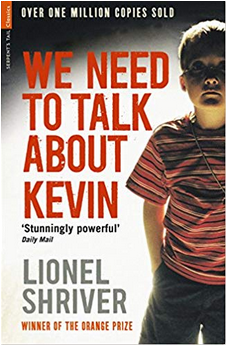 Lionel Shriver's 2003 novel We Need To Talk About Kevin was inspired by the 1999 shootings in Colombine, USA. The Colorado town is where Eric Harris and Dylan Klebold murdered twelve fellow students and a teacher at their high school. Shriver references the killings in her novel by making the Kevin of the title commit mass murder in a similar way. The book is structured in the form of letters from Eva Khatchadourian to her estranged husband Franklin Plaskett, in which she charts her cold relationship with their son Kevin. Her maternal indifference and occasional violence towards the boy may, she fears, have contributed to his sociopathic tendencies. In the book, Shriver examines the age-old question of nature versus nurture to determine why Kevin acts the way he does. Lacking normal emotions and the capacity for love, he is contemptuous and manipulative, reserving special hatred for his mother. He's certainly a hard character to like, let alone love. Here's the synopsis from Amazon: 'Eva never really wanted to be a mother; certainly not the mother of the unlovable boy who murdered seven of his fellow high school students, a cafeteria worker and a teacher who tried to befriend him. Now, two years later, it is time for her to come to terms with marriage, career, family, parenthood and Kevin's horrific rampage in a series of startlingly direct correspondences with her absent husband, Franklyn. Uneasy with the sacrifices and social demotion of motherhood from the start, Eva fears that her alarming dislike for her own son may be responsible for driving him so nihilistically off the rails.' 5. Room - Emma Donoghue, 2010 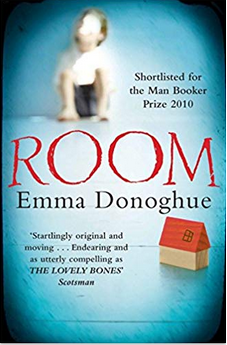 Emma Donoghue wrote her acclaimed novel, Room, in 2010 after the Josef Fritzl case became news world-wide. In 2008, Elisabeth Fritzl, 42, told police she had been held captive by her father for twenty-four years in makeshift accommodation below the family home in Austria. Fritzl had raped her throughout that time and as a result she had given birth to seven children by him. Among them was five-year-old Felix, the inspiration for Donoghue’s Jack, held captive along with his mother in Room. To me, Room is an incredible book. Emma Donoghue took a brave step in narrating its events from the perspective of a five-year-old boy and her gamble largely pays off. In places, it doesn't quite work - Jack sometimes acts with a maturity beyond such a young child's capabilities, but I still consider Room an excellent read. Had I written it, I'd have told the story from Ma's point of view, as I suspect many authors would have done. I admire Donoghue, therefore, for not taking the obvious route when writing the book. Her way is powerful because of course, Jack doesn't understand his situation, enhancing the suspense for the reader as the truth about Room is revealed. His childish perception also acts as a tool to inject humour into the narrative. It's gripping stuff! Here's the synopsis from Amazon: 'Today I'm five. I was four last night going to sleep in Wardrobe, but when I wake up in Bed in the dark I'm changed to five, abracadabra. Jack lives with his Ma in Room. Room has a single locked door and a skylight, and it measures ten feet by ten feet. Jack loves watching TV but he knows that nothing he sees on the screen is truly real - only him, Ma and the things in Room. Until the day Ma admits there is a world outside. Devastating yet uplifting, Room by Emma Donoghue is a luminous portrait of a boundless maternal love. It has sold more than two million copies, was a number one bestseller and was shortlisted for the Man Booker and Orange prizes. Few books have reached modern classic status so swiftly.' Bonus - a sixth book! This one's a true crime story... 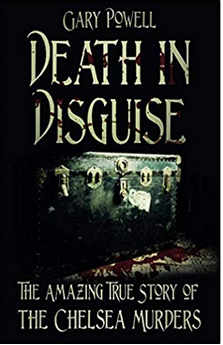 Whilst it's not a novel but a true crime story, I wanted to include Death in Disguise: The Amazing True Story of the Chelsea Murders, by Gary Powell. I thought it would be interesting to add at least one real-life crime book to this blog post. Here's the synopsis from Amazon: Victorian Chelsea was a thriving commercial and residential development, known for its grand houses and pleasant garden squares. Violent crime was unheard of in this leafy suburb. The double murder of an elderly man of God and his faithful housekeeper in two ferocious, bloody attacks in May of 1870 therefore shook the residents of Chelsea to the core. This volume examines this extraordinary case, one which could have leapt straight from the pen of Agatha Christie herself: the solving of the case relied on the discovery of a packing box dripping with blood, and the capture of a mysterious French nephew. This volume, compiled by a former detective, looks at the facts: no direct evidence to place the suspect at either of the crime scenes; no weapon recovered; no motive substantiated. It lets you, the reader, decide: would you, on the evidence presented, have sent the same man to the gallows? Sounds fascinating! If you're interested, here's the link to Gary's book on Amazon or you can click the image. Isn't that a fantastic cover, by the way? Let's hear from you! What novels based on real-life crimes have you enjoyed? Leave me a comment and let me know!
A gripping thriller that's also heart-breaking 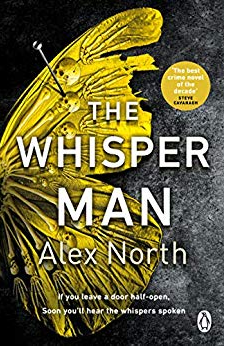 What a gorgeous cover! What a gorgeous cover! Wow! Yesterday I finished Alex North's best-selling novel 'The Whisper Man', and loved it. Two of the scenes towards the end of the book brought tears to my eyes. Not many books manage to do that, but it's wonderful when they do. I had my doubts when I first picked up 'The Whisper Man', however. We're introduced early in the novel to DI Pete Willis, a man with a troubled childhood, a divorce in his rear mirror and a drinking problem. Cliché number one. Then there's the plot. A boy has gone missing, in circumstances that mirror the crimes of Frank Carter, now in prison. Is a copycat killer at work? Cliché number two. Except that 'The Whisper Man' is so beautifully written, and Alex North provides such a fresh spin on an old tale, that I couldn't help but get drawn in. I'm glad I did. The book was rated the best crime novel of the decade by Steve Cavanagh, and he's someone who knows how to craft an excellent read! Here's a taster of the plot: If you leave a door half-open, soon you'll hear the whispers spoken . . . Still devastated after the loss of his wife, Tom Kennedy and his young son Jake move to the sleepy village of Featherbank, looking for a much-needed fresh start. But Featherbank has a dark past. Fifteen years ago, a twisted serial killer abducted and murdered five young boys. Until he was finally caught, the killer was known as 'The Whisper Man'. Of course, an old crime need not trouble Tom and Jake as they try to settle in to their new home. Except that now another boy has gone missing. And then Jake begins acting strangely. He says he hears a whispering at his window . . . A novel of loss, love and the relationship between father and son Creepy stuff, huh? Yet underneath all the horror the book deals with themes of grief, loss and love. Alex North masterfully portrays a father, still mourning for his dead wife, who struggles to understand his young son. They love each other, yet don't communicate well; Tom feels he's failing as a parent, while Jake believes he disappoints his dad. Both are wrong, yet it takes tragedy to convince them otherwise. I've already said that DI Pete Willis appears at first to be a cliché. Yet Alex North hasn't made him that way out of laziness; reasons exist why the plot needs this character to suffer a troubled childhood and why he descended into alcoholism in the past. It all forms part of a coherent whole, as does the fact there's a copycat killer. Along the way Alex North delivers great plot twists - one, about halfway through, stunned yet delighted me! In the same way, he avoids taking the easy option towards the end; when he could have delivered a nice, comfy happy-ever-after, he choose something different, in the first of the two chapters that made me cry. Here the writing could, in the hands of a lesser author, have descended into cheesiness, but it didn't. Instead, it was beautiful. So, too, was a later scene, in which we discover Alex has misled us as to the identity of one of the minor characters. I won't say more, as I don't want to give plot spoilers, but the wrap-up is excellent, including the fate of the copycat killer, who gets what he deserves as well as what he craves. If you enjoy great crime fiction, do yourself a favour and read this book. At times spine-chillingly tense and at others heart-breaking, this is one of the best crime novels I've read this year. What about you? Have you read 'The Whisper Man'? If so, what did you think? Liked it, loathed it? Leave a comment and let me know!
I'm a huge admirer of Stephen King. I love his work, but I'm also in awe of his prolific output. Many of his novels are over 700 pages in length and he's written so damn many of them - fifty-eight, to be exact! He's also penned over two hundred short stories and five non-fiction books. OK, so he embarked on his writing career decades ago, but even so the sheer volume of his output is impressive. In this week's blog post, I'll examine five other prolific authors. 1. Dame Agatha Christie 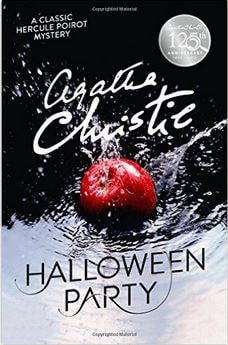 Dame Agatha Christie was an English crime novelist, short story writer and playwright. She wrote sixty-nine novels and nineteen plays, published over a fifty-six year period, and she also authored romantic fiction under the pseudonym Mary Westmacott. Her murder mystery play, The Mousetrap, holds the record for being the world's longest-running theatre production; in 1971 she was made a Dame of the British Empire for her enormous contribution to literature. Besides being prolific, Dame Agatha is the most published novelist in history, and her estimated sales are in the region of three billion (!) books. I read all her detective stories during my teens, being swept away by the sleuthing skills of Miss Marple and Hercule Poirot, as well as Christie's fascinating plots. Her novels have been translated into over one hundred languages. 'And Then There Were None' is her best-selling title, having sold over 100 million copies to date, making it one of the most popular books of all time. Wow! 2. Dame Barbara Cartland 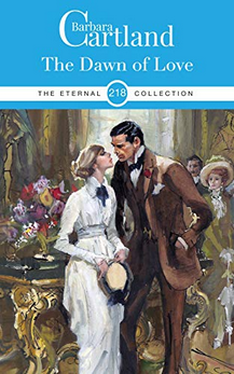 Another Dame of the British Empire! Barbara Cartland wrote 723 novels, which have been translated into thirty-six languages, and she holds the world record for the most novels published in a single year - twenty-three. Twenty-three?! Did she ever sleep? Admittedly her books tend to be short, but even so... She wrote romantic fiction primarily but also plays and music. Her book sales reportedly top 750 million copies, although some sources have put the figure at over two billion. Two billion?! Even if the first figure is more accurate, that's a lot of book sales - I can only aspire to such numbers! Barbara Cartland's books are tame by today's standard, featuring virginal heroines and little, if any, sexual imagery. Her later novels were historical romances, which made it easier to cast virgins as the protagonists. During her later years, she became a self-proclaimed expert on romance although her views were considered hopelessly outdated by many. I well remember her many television appearances in which she'd expound her views on various issues, including gentlemanly conduct and how to keep the romance in relationships. She was a very memorable character, usually appearing bedecked in jewels, wearing flouncy pink dresses and clutching a fluffy white dog. They don't make them like that anymore! 3. Nora Roberts 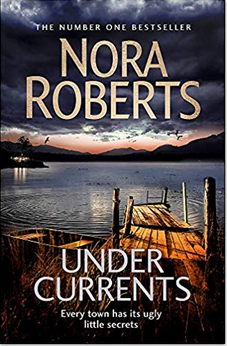 The only one of my chosen novelists still alive, Nora Roberts also writes romance novels and to date has published two hundred and nine. She concentrates on one book at a time, which makes her prolific output even more remarkable. She writes for eight hours a day, every day, without fail, even when on holiday. (I'm starting to doubt whether the authors I've chosen are human!) In the nineties, her publishers decided they couldn't keep pace with her output and asked her to consider adopting a pseudonym so they could publish more of her work each year. She decided to use her new pen name to switch tack and begin writing romantic suspense fiction, under the name of J D Robb. As J D Robb, Roberts has also published a series of science fiction novels set in the mid-twenty-first century, featuring a New York City detective. Whilst these novels are police procedural ones as well as science fiction, J D Robb has maintained the romantic element by focusing on the relationship between Detective Eve Dallas and her husband. Since 1999, every one of Nora Roberts's books has been a New York Times bestseller, and she was the first novelist to be admitted to the Romance Writers of America's Hall of Fame. An amazing woman! 4. John Creasey 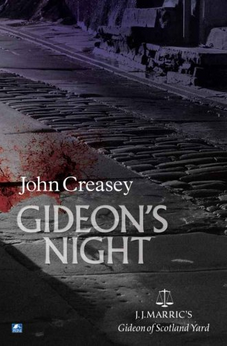 John Creasey was an English crime and science fiction writer with six hundred novels to his credit, using twenty-eight pseudonyms. Six hundred?! I need to up my game, and quickly... Many of his characters, such as The Honourable Richard Rollison (The Toff) and Commander George Gideon of Scotland Yard, continued through a series. Besides crime and science fiction, he also wrote Western novels and romances, using his various pen names. In 1962, Creasey won an Edgar Award from the Mystery Writers of America (MWA) for 'Gideon's Fire', written under his pseudonym J. J. Marric. In 1969 he received the MWA's greatest honour, the Grand Master Award. In the UK, Creasey founded The Crime Writers Association (CWA), which awards the New Blood Dagger each year for a first book by an unpublished writer. Another recipient of a UK honour, he was awarded the MBE (Member of the Order of the British Empire) for his services during World War Two. 5. Isaac Asimov 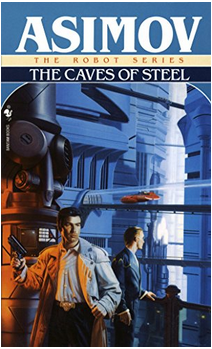 The last of our prolific wordsmiths, Isaac Asimov, was a science fiction writer, although he also wrote scientific non-fiction, being a professor of biochemistry at Boston University. He either wrote or edited over five hundred books as well as an estimated ninety thousand letters. Like the other authors I've mentioned, Asimov's works have been extensively translated into other languages. Asimov received several awards for his writing, as well as fourteen honorary doctorate degrees. His short story 'Nightfall', written in 1941, was voted by The Science Fiction Writers of America as the best one ever written in its genre and he was made a Grand Master of the SFWA in 1987. His most interesting accolade may well be the fact that in 2009 a crater on Mars was named after him - I love that! Unusual facts about Asimov? He claimed in the third volume of his autobiography to love small, enclosed spaces, citing his childhood desire to own a subway magazine stand, in which he'd ensconce himself and listen to the rumble of the trains as he read. Each to their own... Phew! I feel exhausted... I'm sure you're probably as dumbstruck as I am at the literary output of the authors I've mentioned! I feel tired just thinking about writing six hundred books - although, given my late start as a novelist, it's unlikely I'll achieve one hundred titles, let alone six times that number. Speaking of which, I'd better stop blogging and get back to writing - I'll catch up with you again in my next post. Until then...
The most popular question to ask novelists  Novelists get asked this question more than any other. It's as if people think there are certain, very specific, stimuli that give rise to ideas for novel plots, and others that don't. Not so! Inspiration can be found everywhere, if you know where to look. When I'm asked where I get my ideas, I say 'from the world around me.' Writers tend to be great at observation, particularly people watching. Like many authors, I always have to hand a way of capturing ideas when they strike, whether it's via my phone or pen and paper. Right now, I have over fifty plot possibilities listed on my computer, and I'm betting that other authors may have double or triple that number. Novelists are capable of weaving plot ideas from virtually any situation. Take a simple example. I'm in a cafe, staring out of the window, and I spot a woman crossing the road. She's hurrying, her expression clouded; a small girl is clutching her hand. Immediately, this sparks several plot possibilities. Where does she need to get to so fast, and why? Is she running from something or someone? If so, what or whom? Is the child her own, or has she snatched her? What's causing her to look so worried? One very ordinary scenario, but with so much potential! Posing questions is a useful tactic I'm not suggesting every idea is worthy of being turned into a full-length book. Many aren't. An idea needs to be capable of sustaining characters and plot, and some might be better suited to a short story or subplot. When the right idea strikes, though, it's an amazing moment, at least for me. I get a strong gut instinct, signalling 'this is IT!' Intense excitement follows; for hours afterwards, my brain won't stop buzzing with ways to develop the idea into a novel. Television news and the press are useful for gathering ideas. Say, for example, I read about a hit-and-run accident. I immediately focus on the emotions involved, posing questions such as 'what if?' and 'how would that feel?' What mental turmoil must the driver be experiencing? Was he/she concerned about financial problems/their marriage/work issues, leading to careless driving? What will the consequences be? How is the victim's family coping? All rich sources of inspiration for the plot or subplot of a future novel! Themes as a source of inspiration Something else I find works well is to consider themes that appeal, ones evoking strong emotions. I turn a subject over in my brain, spinning out from a one-word premise, such as obsession, all the possibilities that arise. A mental mind map, if you like! For my sixth novel, 'Deception Wears Many Faces', I was drawn to the theme of betrayal. Duplicity elicits fierce emotions, from a desire for revenge to suicidal impulses. How did this idea originate? Television again. I watched a BBC documentary on the subject of con artists. As the sad stories unfolded, that familiar gut feeling hit me hard - YES! I knew I'd found the material for a future novel plot. Other potential sources of inspiration? This doesn't work for me, but many writers report using daydreaming or dreams themselves to spark their creativity. One of my novelist friends told me the plot of her first book came to her as she slept. Others say meditation or creative visualisation helps. Enter Plot Monkey! For fun a while ago, I tried out a piece of software (no longer available) called Plot Monkey. It's a random idea generator, based on who, what, how, when and where. Using those criteria, or whichever ones you select, it generates plot ideas. The results are hilarious. Take this gem it produced: two small boys wipe out an outlaw gang using a hammer to win fame during the civil war in Australia. Well, that's expanded my education! I was unaware Australia ever had a civil war... Or this: A herpetologist tries to destroy an Army base by being unfaithful to hide the truth during the civil war alongside a boat. Looks like our resident monkey has a thing for civil conflict... Here's my favourite, seeing as my fourth, 'The Second Captive', examines Stockholm syndrome: a person suffering from Stockholm Syndrome plays a deadly game with a hack saw to prove a point in the future in the desert. Nope, no hack saws or deserts in 'The Second Captive'! Sorry, Plot Monkey, I'll carry on getting ideas as and when they arise - you stick to finding your next banana! How would it feel to discover you'd been abducted as a child? 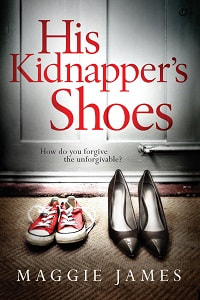 To illustrate the diverse sources of novel ideas, let's look at how I got the inspiration for four of my own books, starting with 'His Kidnapper's Shoes'. In 2010, I was chatting with fellow travellers in Vietnam, discussing what happens when children disappear. I ventured the opinion that most, sadly, are killed by opportunistic predators. One woman disagreed. 'I suspect sometimes they're stolen to order,' she said. 'For childless couples, who, for whatever reason, can't adopt.' That got me thinking. What would it be like to discover you'd been abducted as a child? How would someone react on finding out the woman who raised them is a kidnapper? I love examining strong emotions, and such a situation would spark off intense feelings: anger, betrayal, and the desire to unearth the truth. When obsessive love leads to murder 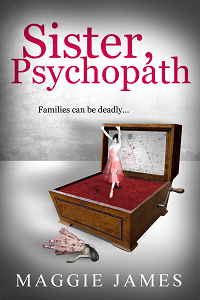 Let's examine my second novel, 'Sister, Psychopath'. Several years ago, I attended a writing course, during which the conversation turned to a real-life murder case. Our teacher told us about a woman who became obsessed with a man, believing herself in love. So much so that she decided to kill his wife and child in the hope of marrying him. She carried out her plan, but her daughter suspected what she'd done, leading to her mother's arrest and conviction. When I heard this, I knew I had the basis for a novel. Lots of questions jumped out at me. How would it feel to be the daughter in this situation? Or the woman herself, obsessed to the point of murder? What about the subject of her infatuation, a man now bereft of his family? In the end, I centred on the daughter's story by creating the character of Megan Copeland, and changed the events to attempted murder, with no child involved. The novel ended up taking a different route, concentrating instead on the relationship between Megan and her sociopathic half-sister, Chloe. Psychopathy always provides plenty of material for novelists! Discovering someone you love has a secret past 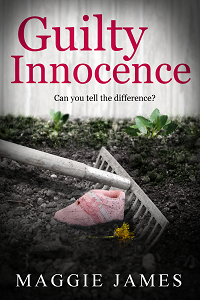 I don't remember the exact source of inspiration for my third novel, 'Guilty Innocence'. I suspect I heard about some terrible crime via the television news, because I do recall the idea came from the premise: how would it feel to discover someone you love has a secret past? That sparked a host of other questions. What could be so awful you'd need to keep it hidden? How might the truth be revealed? Serious crime seemed the best reason for such a cover-up, which begged the question: what, exactly? The answer was child murder; no other crime incites such passions in the public mind. The twist is that Mark Slater is innocent of the killing of two-year-old Abby Morgan. This doesn't mean he's without his demons to slay; his wrongful conviction has always eaten away at him. In addition, he has his nemesis, the twisted and violent Adam Campbell, to confront... Victims who become emotionally attached to their abusers 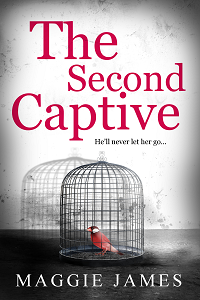 Finally, let's look at my fourth novel, 'The Second Captive'. The book examines the fascinating psychological condition known as Stockholm syndrome, in which victims become emotionally attached to their abusers. Fertile ground for novelists! The inspiration for this book came from hearing about a young woman who returned home after an absence of several years, in a distressed state, but wouldn't say what had happened to her. I was instantly intrigued. Why was she refusing to talk? Where had she been, and with whom? Stockholm syndrome came to mind as the answer. A vulnerable individual, held captive in an abusive situation, who's too ashamed after her escape to reveal the truth. And so the character of Beth Sutton was born, along with the disturbed and dangerous Dominic Perdue, her captor… let's hear from you! I hope you have enjoyed this blog post, and that it's given you some insight into the creative process for fiction writers. Are there any questions you'd like to ask on the topic? If you're a writer, do you get your ideas from specific sources, such as meditation or visualisation? Leave a comment and let me know!
|
Categories
All
Subscribe to my blog!
Via Goodreads
|
 RSS Feed

Privacy policy Website terms and conditions of use
Copyright Maggie James 2018 - current date. All rights reserved.
Copyright Maggie James 2018 - current date. All rights reserved.